
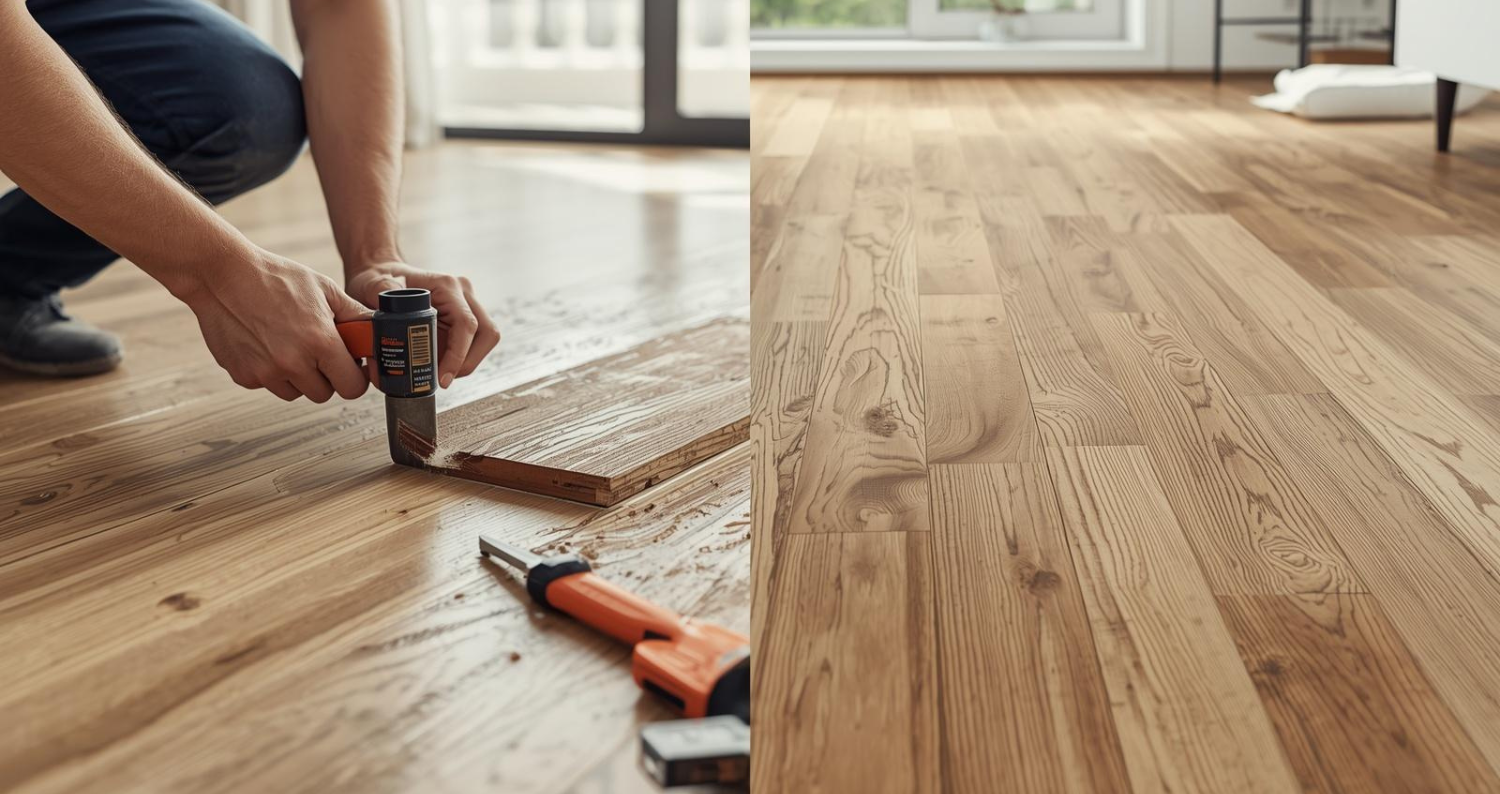
Hardwood floors are more than just a design choice—they’re an investment in your home’s value, warmth, and timeless appeal. But over time, even the most durable hardwood can show signs of wear. Scratches, stains, warping, or dullness can leave homeowners wondering: should you repair your hardwood floors or replace them entirely?
The answer isn’t always straightforward. It depends on the condition of your floors, your budget, and your long-term goals. Let’s break it down in a practical, homeowner-friendly way so you can make the right decision with confidence.
Understanding the Condition of Your Floor
Before deciding, it’s important to assess what you’re dealing with. Not all damage calls for a full replacement.
Minor Issues:
- Surface scratches
- Fading or dull finish
- Small dents or scuffs
Moderate Damage:
- Deep scratches
- Water stains
- Slight warping in localized areas
Severe Damage:
- Extensive water damage
- Structural warping or buckling
- Mold or rot
If your floor falls into the first two categories, repair is often the smarter and more cost-effective route. Severe damage, however, may push you toward replacement.
When Hardwood Floor Repair Makes Sense
Repairing your hardwood floor can breathe new life into your space without the higher cost and disruption of a full replacement.
- Cost-Effective Solution
Repairs are typically much more affordable than installing new hardwood. Refinishing alone can make a decades-old floor look brand new at a fraction of the price.
- Preserves Original Character
Older hardwood floors often have a unique grain and character that’s hard to replicate. Repairing helps retain that charm, especially in historic homes.
- Faster Turnaround
Most repair jobs—like sanding, refinishing, or replacing a few boards—can be completed in days rather than weeks.
- Eco-Friendly Choice
Repairing reduces waste and avoids the need for new materials, making it a more sustainable option.
Best for:
- Light to moderate wear
- Localized damage
- Homeowners on a budget
- Preserving vintage or high-quality wood
When It’s Time to Replace Your Hardwood Floor
Sometimes, repairs just won’t cut it. If your floor has reached the end of its lifespan, replacement might be the better long-term investment.
- Extensive Damage
If large sections are warped, rotting, or affected by water damage, repairs can become patchy and unreliable.
- Multiple Previous Repairs
Hardwood floors can only be sanded and refinished a limited number of times. If your floor has already been refinished several times, replacement may be the only viable option.
- Outdated Design
If your flooring looks dated or doesn’t match your current interior style, replacing it gives you the chance to upgrade your home’s aesthetic.
- Structural Issues
If the subfloor is damaged or unstable, replacing the entire flooring system ensures safety and durability.
Best for:
- Severe or widespread damage
- Floors beyond refinishing limits
- Major home renovations
- Long-term property upgrades
Longevity and Value Considerations
A properly repaired hardwood floor can last many more years, especially if the underlying structure is still strong. However, a brand-new hardwood floor offers a fresh lifespan of 20–50 years, depending on the material and maintenance.
If you’re planning to sell your home, both options can add value—but a newly installed floor often makes a stronger impression on buyers.
Aesthetic Impact: Restore or Reinvent?
Repairing your floor keeps its original look intact, which can be a huge advantage if you love its current style.
On the other hand, replacement allows you to:
- Change wood species
- Update color and finish
- Choose wider planks or modern styles
It’s essentially the difference between restoring charm and creating something entirely new.
Key Questions to Ask Before Deciding
To make the best choice, ask yourself:
- How extensive is the damage?
- What is my budget?
- Do I want to preserve or upgrade the current look?
- How long do I plan to stay in this home?
- Has the floor been refinished before?
Your answers will naturally point you toward repair or replacement.
Final Verdict: What’s the Better Option?
There’s no one-size-fits-all answer. If your hardwood floors have minor to moderate damage, repair is often the smarter, faster, and more cost-effective choice. It restores beauty without breaking the bank.
However, if your floors are structurally compromised, heavily worn, or simply outdated, replacement is a worthwhile investment that delivers long-term durability and a fresh new look.
Closing Thoughts
Hardwood floors are built to last—but even the best materials need attention over time. Whether you choose to repair or replace, the key is making an informed decision based on condition, cost, and your vision for your space.
When in doubt, consulting a hardwood flooring professional can give you a clear picture of what your floors truly need. After all, the right choice doesn’t just fix your floors—it enhances the entire feel of your home.
continue reading